Guides.
How CAPTCHA and anti-bot systems actually work under the hood, and how to work with them - reCAPTCHA scoring internals, error codes, and why a score comes back low. 7 articles in this category.
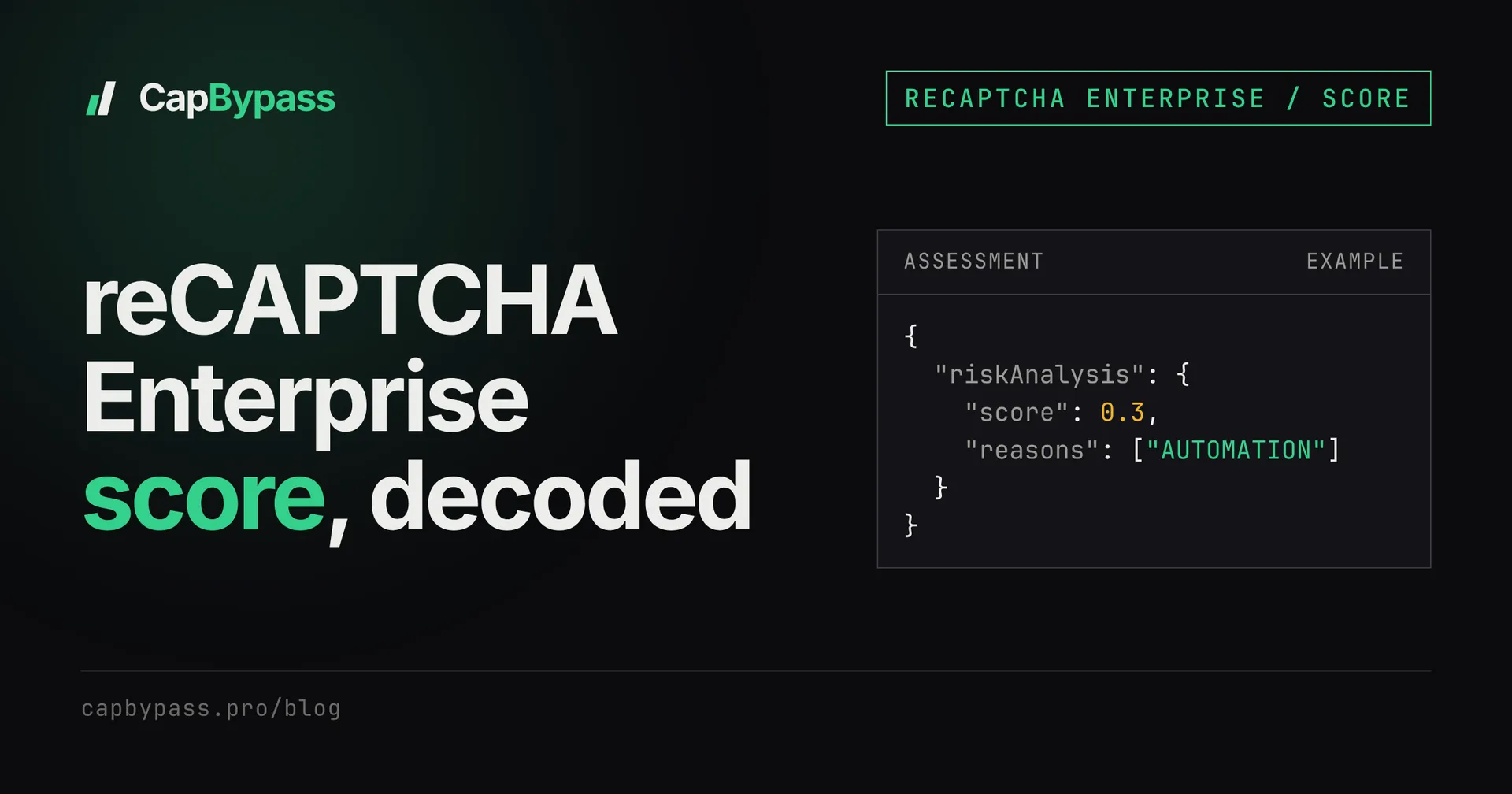
reCAPTCHA Enterprise score: what the reasons mean
What a reCAPTCHA Enterprise score and its reasons[] mean, why tokens fail as EXPIRED or DUPE, and minting a fresh token with ReCaptchaV3EnterpriseTaskProxyLess in Python.
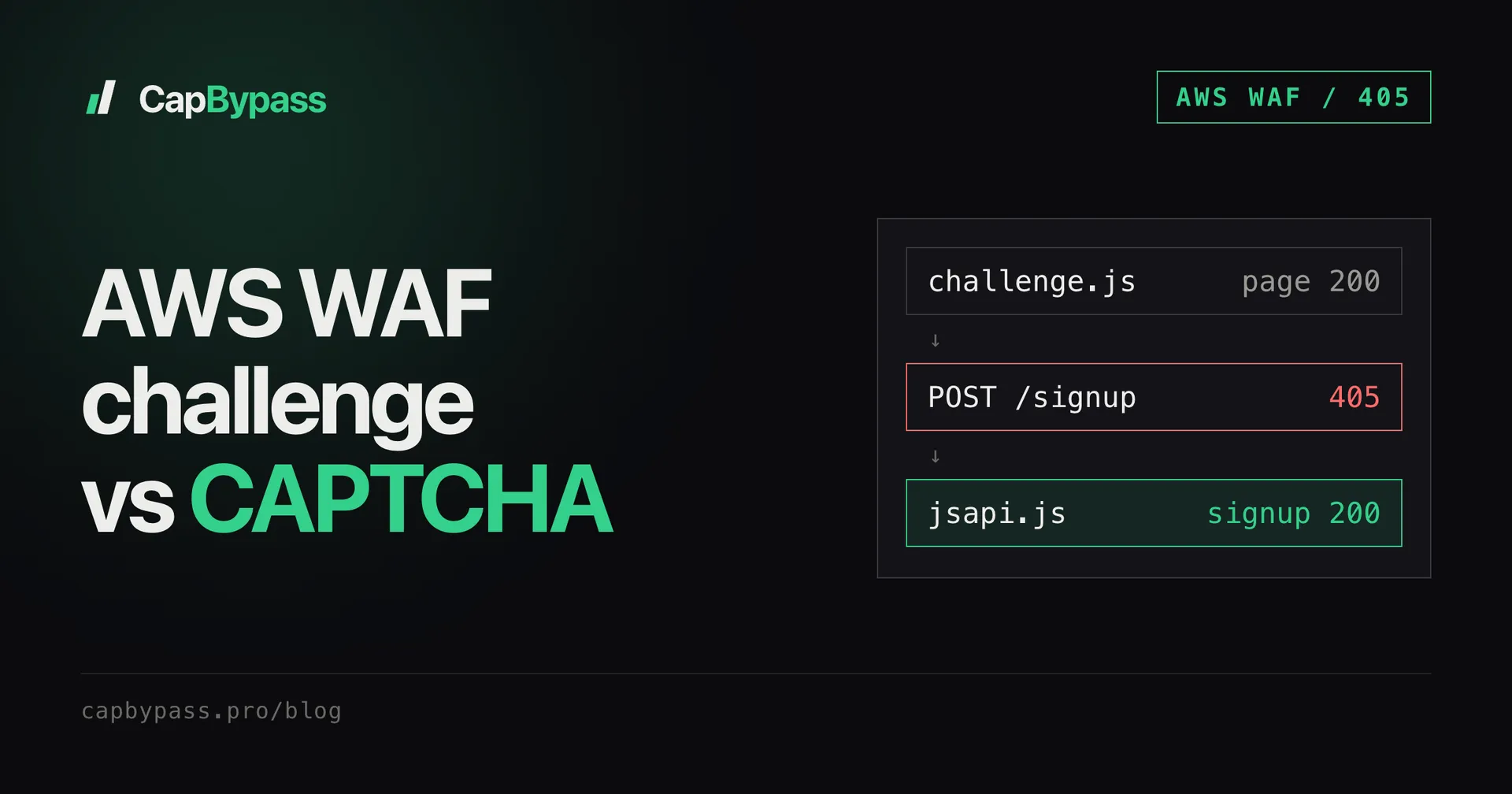
AWS WAF challenge vs CAPTCHA: which token you need
A challenge.js token loads pages but a sign-up POST still returns 405. How AWS WAF challenge and CAPTCHA rules differ, when to send awsChallengeJS or awsApiJs to AntiAwsWafTaskProxyLess, and why a valid token still gets rejected.
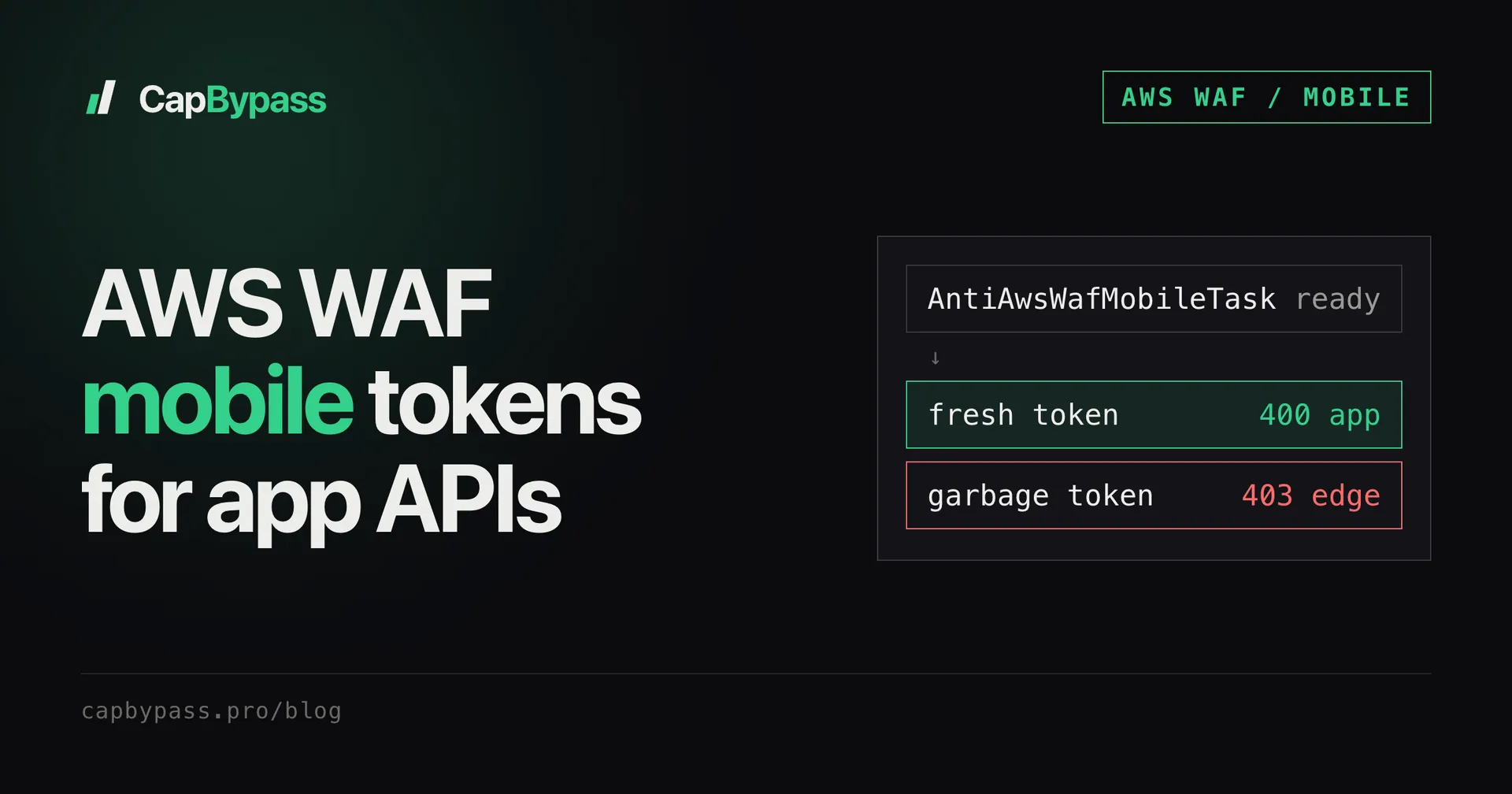
AWS WAF mobile SDK tokens for native app APIs
Native app APIs behind the AWS WAF mobile SDK reject server requests without a mobile-minted aws-waf-token. One AntiAwsWafMobileTask call returns one, with Python and TypeScript code and a way to tell a WAF block from an app error.
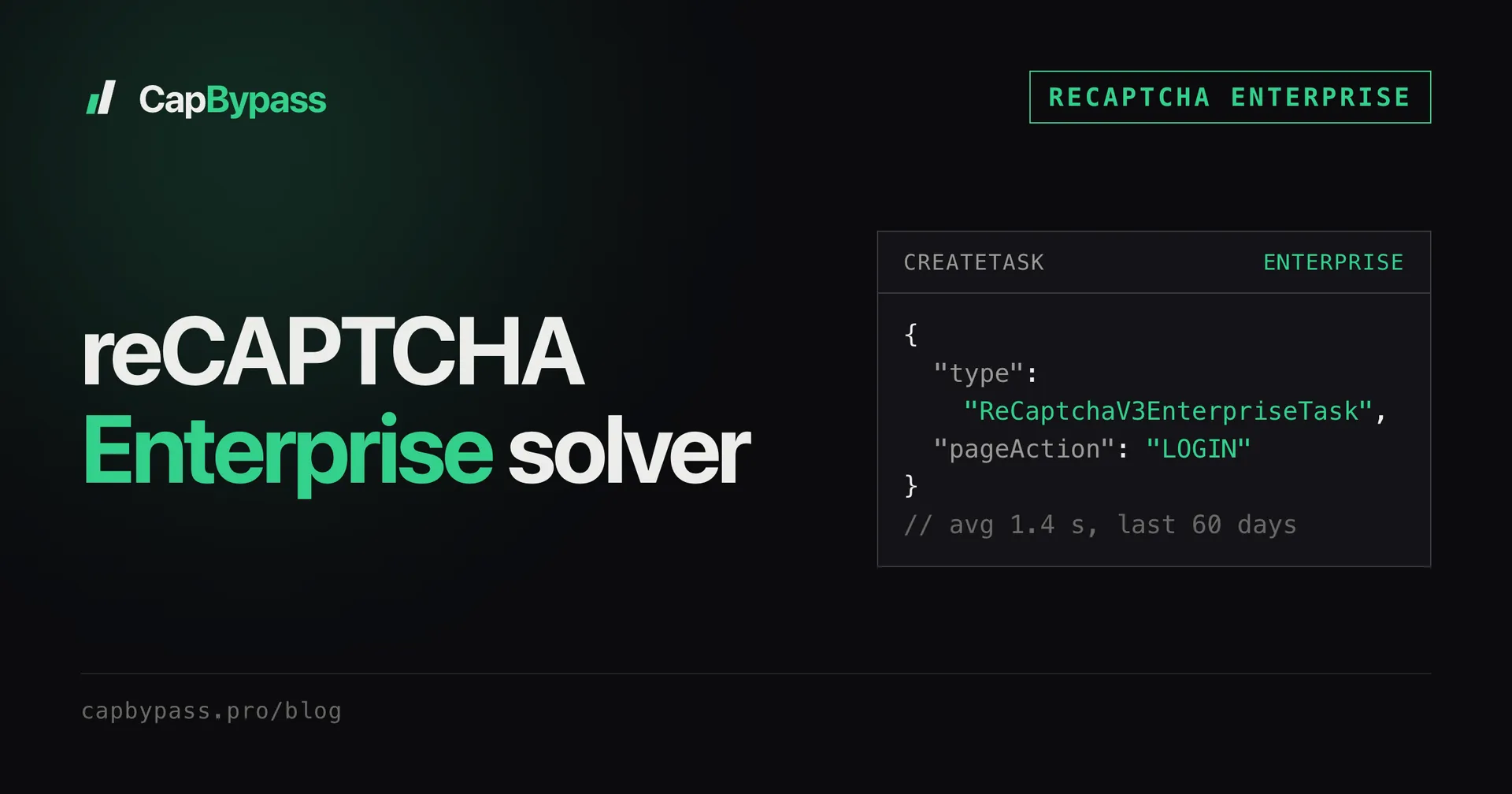
reCAPTCHA Enterprise solver: detect, solve, submit
How to spot an Enterprise key, when to use ReCaptchaV3EnterpriseTaskProxyLess vs ReCaptchaV3EnterpriseTask, working curl, Python and TypeScript code, enterprisePayload and apiDomain, and the production failures worth retrying.
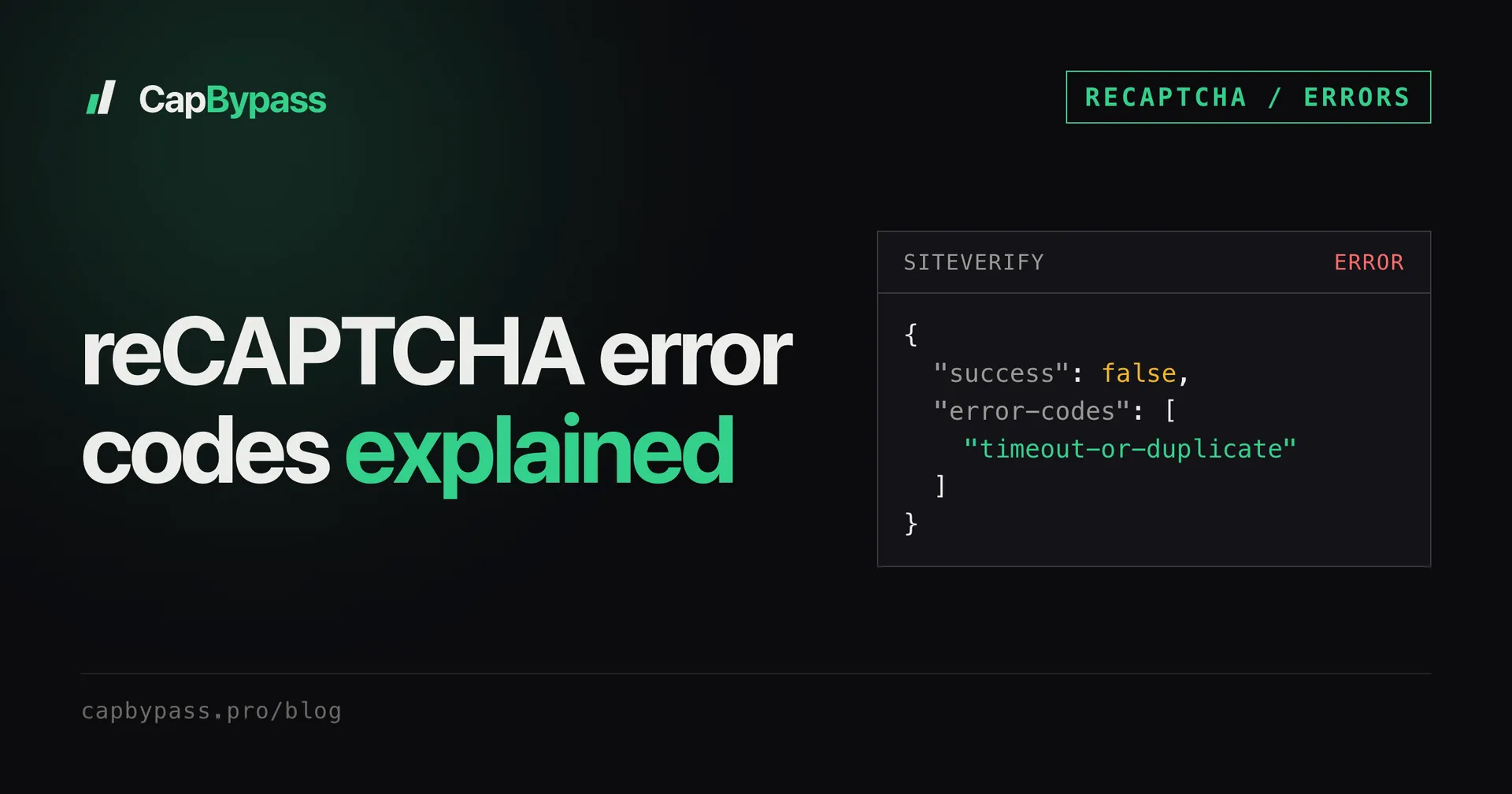
reCAPTCHA error codes explained
What invalid-input-response, timeout-or-duplicate, browser-error and the other reCAPTCHA codes mean when automating, and which are your token's fault.
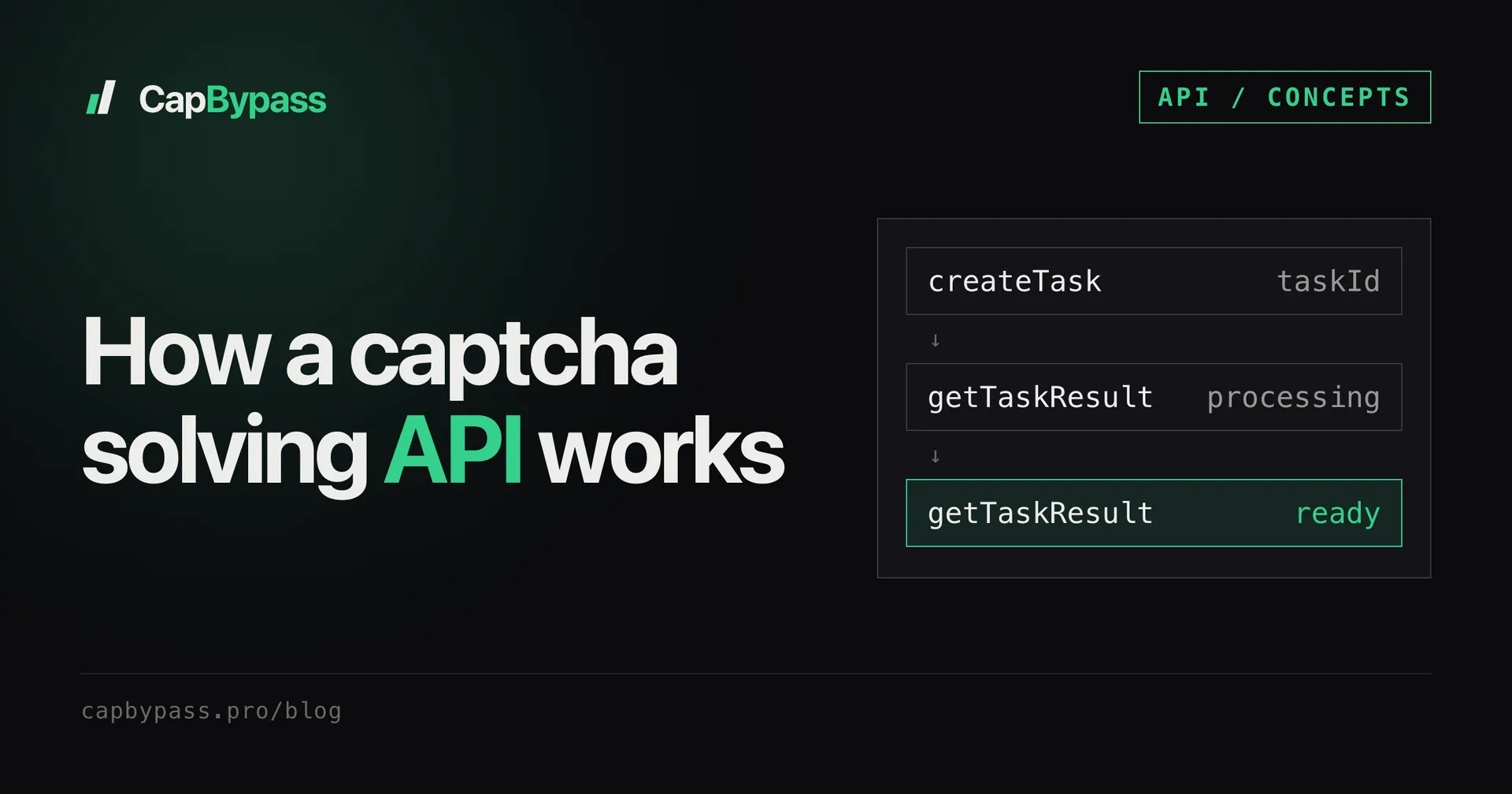
How a captcha-solving API works
The create-task, poll, token model behind captcha-solving APIs - what happens server-side, token vs cookie captchas, and the pay-per-solve billing.
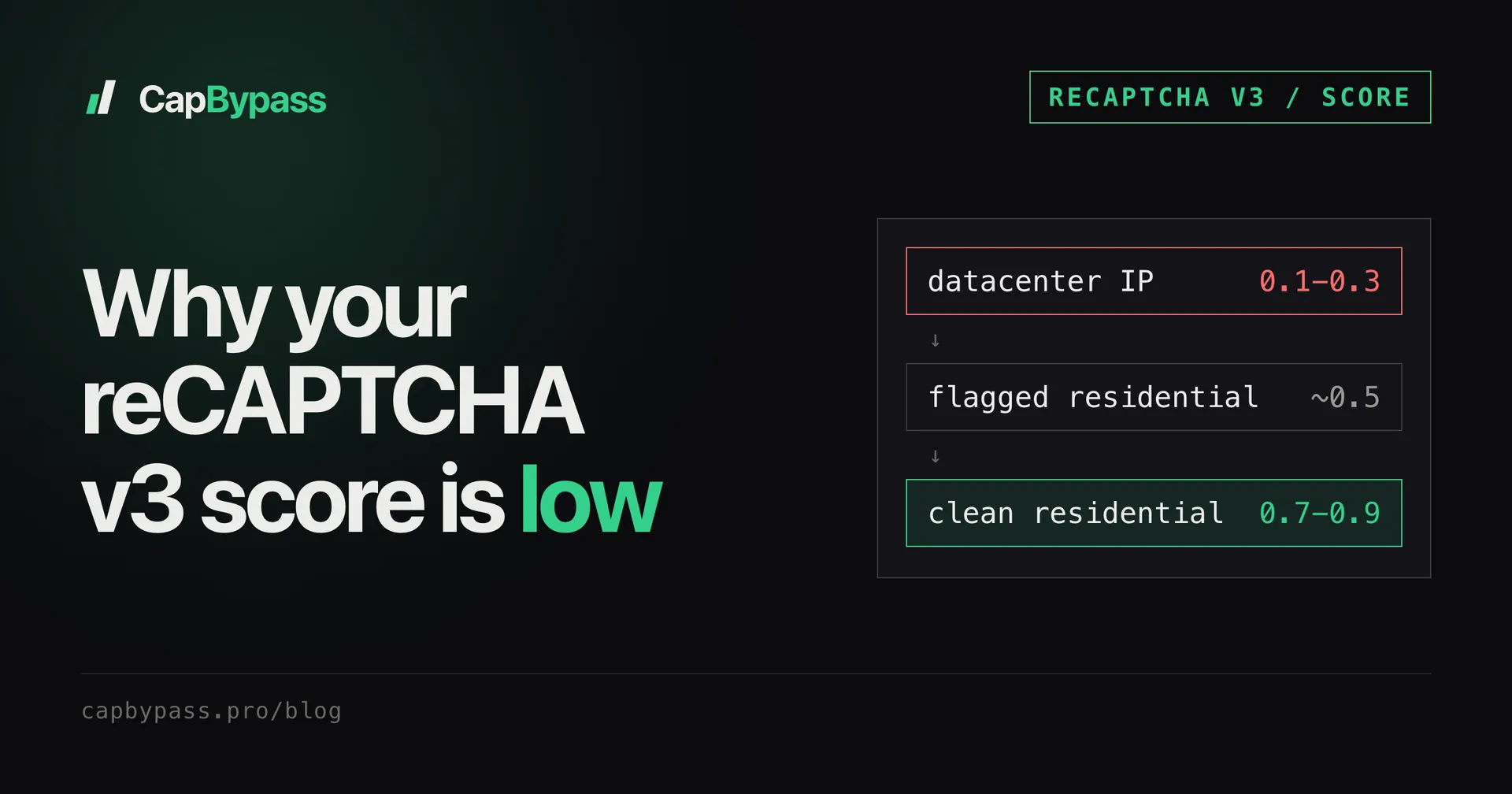
why your reCAPTCHA v3 score is low
Your reCAPTCHA v3 score is set mostly by your proxy's IP reputation, not the solver. How ReCaptchaV3Task splits the work, and a checklist to debug a score that won't climb.